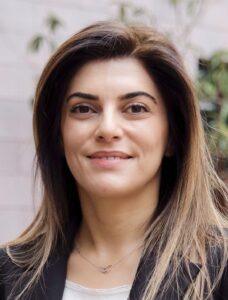
Keynote 1: Beyond Connectivity: Explainable and Robust AI for 6G Control Systems
Wednesday, May 20 @09:15 ΑΜ -10:00 ΑΜ, Room: TBA
Sinem Coleri
Professor, Koc University, Turkiye
Abstract: Future wireless networks are undergoing a fundamental paradigm shift, from enabling communication among humans to enabling real-time control of complex physical systems. While 5G enabled large-scale machine-type communications and data collection, 6G aims to transform this data into actionable intelligence for applications such as extended reality, remote surgery, and autonomous mobility. In this context, communication systems must evolve beyond throughput and latency metrics to support goal-oriented, semantics-aware, and ultra-reliable control loops, where rare failures can be catastrophic. This keynote presents a unified perspective on explainable and robust AI as a key enabler of control-centric 6G networks, structured along three pillars. First, we integrate extreme value theory with generative AI to model and predict rare but critical events for ultra-reliable communications. This approach moves beyond average-case analysis and provides a principled framework for reliability guarantees in next-generation networks. Second, we develop optimization-theoretic AI frameworks for robust and safe radio resource management in wireless networked control systems. By leveraging structure-aware and safety-constrained learning methods, these approaches bridge the gap between data-driven intelligence and control-theoretic guarantees. Third, we demonstrate the role of explainable AI in achieving robustness, interpretability, and trust in safety-critical scenarios. Overall, we argue that combining generative modeling, optimization, extreme value theory and explainable AI will be instrumental in moving beyond connectivity toward intelligent, reliable, and controllable 6G systems.
Bio:
Sinem Coleri is a Professor in the Department of Electrical and Electronics Engineering at Koc University. She is also the founding director of Wireless Networks Laboratory (WNL) and director of Ford Otosan Automotive Technologies Laboratory. Sinem Coleri received the BS degree in electrical and electronics engineering from Bilkent University in 2000, the M.S. and Ph.D. degrees in electrical engineering and computer sciences from University of California Berkeley in 2002 and 2005. She worked as a research scientist in Wireless Sensor Networks Berkeley Lab under sponsorship of Pirelli and Telecom Italia from 2006 to 2009. Since September 2009, she has been a faculty member in the department of Electrical and Electronics Engineering at Koc University. Her research interests are in 6G wireless communications and networking, AI-based wireless networks, machine-to-machine communications, wireless networked control systems and vehicular networks.
Dr. Coleri has more than 150 publications with citations over 12500 (Google scholar profile). She has received numerous awards and recognitions, including TUBITAK (The Scientific and Technological Research Council of Turkey) Science Award in 2024; N2Women: Stars in Computer Networking and Communications in 2022; TUBITAK Incentive Award and IEEE Vehicular Technology Society Neal Shepherd Memorial Best Propagation Paper Award in 2020; Outstanding Achievement Award by Higher Education Council in 2018; and Turkish Academy of Sciences Distinguished Young Scientist (TUBA-GEBIP) Award in 2015.
Dr. Coleri currently holds the position of Editor-in-Chief at the IEEE Open Journal of the Communications Society. Dr. Coleri is an IEEE Fellow and AAIA Fellow.
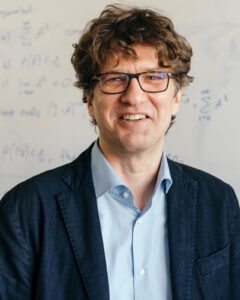
Keynote 2: Integrated Sensing and Communication in 6G
Thursday, May 21 @09:15 ΑΜ -10:00 ΑΜ, Room: TBA
Slawomir Stanczak
Professor, Technical University of Berlin and Fraunhofer HHI, Germany
Abstract: The convergence of communication and sensing functionalities in wireless networks is a key feature of next generation communication systems, shaping the evolution towards 6G and beyond. This talk highlights the Integrated Sensing and Communication (ISAC) research within the 6G-RIC research hub. It explores network sensing approaches that build on 5G systems with minimal changes, such as the use of pilot-based Channel State Information (CSI) and channel mapping, as well as more transformative methods that require a redefinition of the radio interface, including novel waveform design and sub-terahertz (sub-THz) ISAC technologies. We will explore both evolutionary and revolutionary approaches for enabling communications networks to function as advanced sensors.
Bio:
Slawomir Stanczak is Professor of Network Information Theory at the Technical University of Berlin and Head of the Wireless Communications and Networks Department at the Fraunhofer Heinrich Hertz Institute. He is the author of two books and more than two hundred reviewed journal and conference publications in the areas of information theory, wireless communications, signal processing, and machine learning. Professor Stanczak has received research funding from the German Research Foundation and was honored with the Best Paper Award of the German Society for Telecommunications in 2014. He served as an Associate Editor of the IEEE Transactions on Signal Processing from 2012 to 2015 and was Chair of the ITU T Focus Group on Machine Learning for Future Networks including 5G from 2017 to 2020. Since 2020 he has been Chairman of the 5G Berlin association. Since 2026 he has served as Coordinator of the 6G technology transfer hub xG-RIC, which is the successor of 6G-RIC. He has also been Coordinator of the xG-Incubator, a program supporting startups in next generation communication technologies, since 2023.
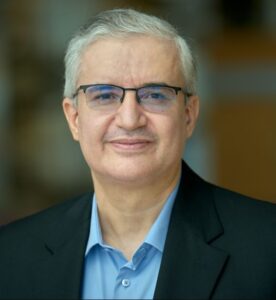
Keynote 3: Tapping into the full potential of the Stratosphere
Friday, May 22
@09:15 ΑΜ -10:00 ΑΜ, Room: TBA
Mohamed-Slim Alouini
Professor, King Abdullah University of Science and Technology (KAUST), Saudi Arabia
Abstract: High-Altitude Platform Stations (HAPS) are emerging as a key complement to LEO satellite mega-constellations, offering a scalable solution for global connectivity and bridging digital divides where terrestrial and satellite networks fall short. Operating from the stratosphere, HAPS leverage advanced beamforming and free-space optics (FSO) to deliver high-capacity and low-latency communications across diverse geographical areas. This talk explores the technologica
l connectivity advancements driving HAPS by highlighting how intelligent beam management and optical feeder and inter-HAPS links can democratize broadband access and provide also unique solutions for disaster recovery, paving the way for a more connected world.
Bio:
Mohamed-Slim Alouini, was born in Tunis, Tunisia. He earned his Ph.D. from the California Institute of Technology (Caltech) in 1998 before serving as a faculty member at the University of Minnesota and later at Texas A&M University at Qatar. In 2009, he became a founding faculty member at King Abdullah University of Science and Technology (KAUST), where he currently is the Al-Khawarizmi Distinguished Professor of Electrical and Computer Engineering and the holder of the UNESCO Chair on Education to Connect the Unconnected. Dr. Alouini is a Fellow of the IEEE, OPTICA, and SPIE and his research interests encompass a wide array of research topics in wireless and satellite communications. He is currently particularly focusing on addressing the technical challenges associated with te deployment of information and communication technologies (ICT) in underserved and disaster-prone areas.